
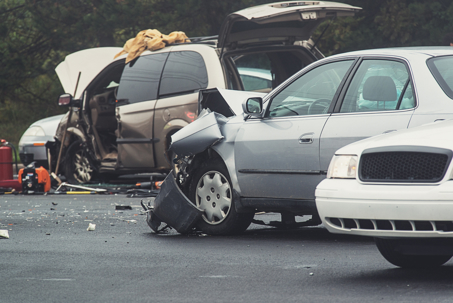
Drivers who use I-84 and I-91 through Hartford every day move through two of the most crash-prone corridors in Connecticut, even when they’re doing everything right. These highways combine 1960s-era design, today’s traffic volumes, and aggressive modern driving into conditions where a single mistake can trigger a multi-car pileup in seconds.
At Carlson & Dumeer, LLC, we live and work in Hartford, and we know these roads the way our clients do. We’ve seen how a split-second crash on the I-84 viaduct or the I-91 curve near Exit 29 can upend a family’s life. Understanding why these crashes happen and how Connecticut law treats fault can help you see that what happened wasn’t just “bad luck” and may not be as simple as blaming one careless driver.
Why I-84 & I-91 Are Hartford’s Most Dangerous Roads
Connecticut Crash Data Repository (CTCDR) data confirms what Hartford drivers feel every day. In one recent study period, I-84 was Hartford’s top crash corridor with 554 crashes, and I-91 was second with 353 crashes, more than any city street. These numbers show how unforgiving these highways are when traffic backs up, drivers follow too closely, or weather or construction complicate the drive.
The core problem is volume on an old design. The I-84/I-91 Hartford interchange sits on a viaduct built for about 55,000 vehicles a day. It now carries roughly 175,000 vehicles on I-84 alone, with I-91 adding around 150,000 more. That mismatch makes this interchange one of the worst bottlenecks in Connecticut and in New England. Congestion, sudden braking, and weaving at merge points are built into the way this interchange functions.
Specific trouble spots compound the danger. The I-84 viaduct runs through downtown Hartford from roughly Sisson Avenue to the I-91 interchange. Lanes feel tight, shoulders are minimal, and there are frequent merges and exits in a short stretch. A minor distraction can send a vehicle across lanes or into a stopped queue with no room for error.
On I-91, the curve near Exit 29 in Hartford is known for limited sightlines and abrupt shifts in traffic patterns. Drivers come off higher-speed segments and suddenly encounter slowing or stopped traffic they can’t see until they’re already committed to the curve. In East Hartford, the I-84 stretch near the I-91 and Route 2 interchanges is notorious for extreme congestion and ongoing construction, with constantly changing lane markings, short merge areas, and unpredictable slowdowns.
How Driver Behavior Fuels Hartford Highway Crashes
Even on overburdened roads, most crashes on I-84 and I-91 start with driver choices. State analysis of the West Hartford section of I-84 found that tailgating was the single most common cause of crashes in that area. When vehicles travel only a few car lengths apart at 50 to 60 miles per hour, one tap of the brakes can turn into a rear-end collision chain reaction involving several vehicles.
We see the same pattern across the Hartford corridors. Speeding, aggressive lane changes, and loss of control show up over and over in highway crash reports. Drivers try to dart from a slow lane to a faster one, misjudge the gap, and sideswipe a vehicle in the blind spot. Others speed into a backup at the viaduct or the Exit 29 curve and can’t stop in time.
Distracted driving is an increasingly common problem on these routes. Glancing down to read or send a text, scrolling a playlist, or holding a handheld device in congested traffic can be enough to miss a brake light or lane shift. On highways where traffic can go from free-flowing to stopped within a few hundred feet, those seconds matter.
Time of day also plays a role. Urban highway corridors, including I-84 near Hartford, see their highest crash numbers during weekday rush hours, with Friday afternoons between 3 and 5 p.m. identified as a peak crash window. That’s when volumes are highest, tempers are shorter, and many drivers are tired or in a hurry to get home, all on roads already operating beyond their intended capacity.
Weather is less of a factor than many people assume. Hartford crash data shows that more than 83% of crashes happen on dry roads in clear weather. That statistic underscores that driver negligence, not storms or ice, is the dominant cause. Speeding, tailgating, distracted driving, and impairment are choices, not conditions.
Road Design & Construction Zones Increase the Risk
The I-84 viaduct through downtown was never built for today’s load. It was designed for about 55,000 vehicles a day and now handles more than three times that volume. The age of the structure and the capacity mismatch mean frequent maintenance, limited shoulders, and design constraints that make it hard to add safe merge lanes or breakdown areas. When a vehicle breaks down or an earlier crash blocks a lane, there’s simply no room for drivers behind to react safely.
Construction work zone hazards are a constant presence on these highways. Active and planned projects on I-84 from Hamilton Street to the I-91 interchange, and around the I-84/I-91 interchange itself, create shifting lane patterns, narrowed lanes, and lane closures. Drivers may encounter temporary concrete barriers, faded or confusing lane markings, and sudden drops in speed limits as they approach a work zone. At night, glare from work lights and headlights can make it harder to see workers, cones, or stopped traffic.
In East Hartford near the I-91 and Route 2 interchanges, ongoing projects often create a mix of short merge ramps, lane drops, and abrupt curves through work zones. A driver who doesn’t realize a lane ends or who comes into a narrowed lane too fast can sideswipe another vehicle, strike a barrier, or force a chain reaction as traffic swerves to avoid a hazard.
In some cases, the road or work zone setup itself may be unsafe. A malfunctioning signal at a ramp, missing or obscured warning signs before a lane closure, poor pavement markings, or a known design defect may all contribute to a crash. When that happens, responsibility isn’t limited to the drivers involved. A government entity or contractor may share liability, although claims against public entities are subject to sovereign immunity rules and special notice requirements.
How Connecticut Law Handles Fault After a Highway Crash
Connecticut is a fault-based insurance system, so responsibility for paying for injuries and property damage usually follows fault. On complex highways like I-84 and I-91 in Hartford, fault is often shared. Connecticut uses a rule called modified comparative negligence, set out in C.G.S. § 52-572h. Under this rule, an injured person can recover damages as long as they aren’t more than 50% at fault. If they’re found 51% or more responsible, they can’t recover anything from other at-fault parties.
Even when an injured person can recover, their compensation is reduced by their percentage of fault. For example, if a driver is rear-ended at the I-84/I-91 Hartford interchange but is found 20% at fault for braking abruptly without a working brake light, any damages award would generally be reduced by 20%. That analysis can be critical in rear-end collision chain reactions, where several drivers are following too closely or not paying attention in heavy traffic.
Multi-vehicle crashes are common on these highways. In a pileup on I-91 near Exit 29 or a series of rear-end impacts on the I-84 viaduct, investigators and insurers may assign percentages of fault to multiple drivers. One driver might be primarily at fault for speeding and distraction, another for following too closely, and a third for making an unsafe lane change. Under Connecticut law, each party is generally responsible only for their proportionate share of the damages.
Timing also matters. In most Connecticut personal injury cases, including highway crashes, C.G.S. § 52-584 sets a two-year statute of limitations from the date of injury. There’s also an absolute three-year cutoff from the date of the negligent act or omission, regardless of when you discover the injury. Missing these deadlines can bar a claim completely, and shorter notice deadlines can apply when a claim involves a government entity, such as a state or municipal agency responsible for road maintenance or design.
What to Do After a Crash on I-84 or I-91
What you do in the minutes and days after a crash on I-84 or I-91 can affect both your health and any future claim.
Focus on Safety & Medical Care First
Call 911 if you can, move to a safer location if it’s possible without risking further injury, and wait for emergency responders. Even if you feel “okay” after the crash, get medical attention as soon as you can. Many highway crash injuries, including concussions, soft-tissue injuries, and internal injuries, aren’t obvious at the scene but show up hours or days later.
Document the Scene & Conditions
If it’s safe, take photos or video of the vehicles, damage, skid marks, lane markings, construction signs, and any visible hazards like missing cones or confusing signage. Note the time of day, weather, traffic level, and anything unusual about road conditions. Get contact information for witnesses and the other drivers. On roads like I-84 and I-91, where design, volume, and work zones all matter, details about the environment can be just as important as details about the vehicles.
Be Cautious with Insurance Communications
Insurance adjusters may contact you quickly, sometimes within hours, asking for a recorded statement. It’s usually not in your best interest to give a detailed recorded statement before you understand your injuries and have legal guidance. Casual comments about speed, visibility, distraction, or “not seeing” another vehicle can be used later to argue that you were more at fault than you really were.
Preserve Evidence Unique to Highway Crashes
On high-traffic corridors like the I-84/I-91 Hartford interchange, important evidence can disappear quickly. Vehicles are towed, debris is cleared, and temporary construction signs or lane markings may change within days. It’s worth noting that Connecticut’s highway traffic cameras are used for live monitoring only and do not record, so witness accounts, dashcam footage, and electronic vehicle data become even more important. Many modern vehicles record data about speed, braking, and steering in an onboard “black box,” and witness memories also fade. The sooner our attorneys are involved, the better the chance of preserving that evidence and other records that can clarify what really happened.
Seeing the Bigger Picture After a Hartford Highway Crash
Crashes on I-84 and I-91 in Hartford, Connecticut rarely have a single simple cause. Driver behavior, overcrowded and aging infrastructure, construction work zones, and Connecticut’s modified comparative negligence rules all interact to determine who’s held responsible and whether an injured person can recover.
If you or someone in your family was hurt on I-84 or I-91, you don’t have to sort out those issues alone. At Carlson & Dumeer, LLC, we draw on our experience with Hartford highway car accidents, our knowledge of these specific corridors, and our network of professionals to evaluate how a crash happened and what options you may have. We’re available 24/7, and we offer a free initial consultation for personal injury cases, so you can talk through your situation and next steps. You can reach us at (877) 795-5594 to speak with our team at Carlson & Dumeer, LLC.